You read a list of signs of religious trauma and kept nodding. The fear of getting it wrong. The habit of checking yourself before anyone else could. The way one leader's opinion could rearrange your whole week. Then the word "leaving" showed up in every paragraph, and you closed the tab.
Because you have not left. You still pray. You still believe, or mostly do, on most days. So maybe this kind of help is meant for other people.
It is meant for you too. Religious trauma therapy is not a program for getting out. If a church, a family, or a community hurt you, you are allowed to want help with that without first deciding what you believe about God.
The harm and the belief are not always the same thing
"Religious trauma" is a loose term. It describes what happened to you, not what you have concluded since. Usually it points to a high-control setting: a group where leaders had a say over private decisions, where doubt was treated as a personal failure, and where belonging depended on staying in line.
Plenty of people were hurt by a setting like that and still hold the faith it taught them. Some found a different congregation. Some stayed in the same one and are trying to work out how to be there more safely. Some believe privately and have not set foot in a church in years.
For some people, the painful part really is tangled up with particular teachings. For others, it was mostly how a group behaved: who got shamed, who got protected, what happened to anyone who asked a hard question. Often it is a mix. Sorting out which is which can be part of therapy, and you are the one who does the sorting.
You can want relief from what happened without first settling what you believe.
Why the worry makes sense
If you are hesitating, there are good reasons. A lot of the conversation about religious trauma online assumes that leaving is the healthy ending. Read enough of it and you could fairly conclude that a therapist in this field would see your faith as a symptom to be treated.
You may also have been warned, directly or not, that therapists are secular and will lead you away. Some communities teach that bringing problems to outsiders is a kind of disloyalty. And if you spent years learning that questions were dangerous, any room where questions are allowed can feel like a trap, even a kind one.
None of that means you are being paranoid. It means you are protecting something that matters to you, which is exactly what a good therapist should respect.
What a good therapist should and should not do
Here is a reasonable standard to hold anyone to, including me.
A good therapist for this will:
- Treat your faith as part of who you are, not as the problem.
- Follow your lead on what you want to keep, question, or leave alone.
- Work on the specific things that hurt: the fear, the shame, the family strain, the anger you are not sure you are allowed to feel.
- Be honest about their own stance when you ask.
And a good therapist will not:
- Argue theology with you, in either direction.
- Hint that you would be healthier if you left.
- Hint that you would be healthier if you came back.
- Decide in advance what a good outcome looks like for you.
The way I work is built around that. Much of it draws on acceptance and commitment therapy (ACT), which focuses on making room for hard feelings and living by what you actually value. For a lot of people who still believe, those values are shaped by their faith. That is fine. Therapy works with your values, not against them. If you want the plain version, it is in the FAQ under whether I will try to talk you out of, or back into, your faith. The answer is no.
What people who still believe often bring
It can help to see that your reasons for wanting support are ordinary ones. People in your position often come in with something like:
- A faith that feels knotted together with fear, so that prayer brings anxiety instead of rest.
- Anger at a pastor, bishop, or elder that feels like anger at God, and guilt about having it at all.
- Staying in a congregation and not knowing how to protect yourself there.
- Changing churches and finding the old reflexes came along anyway.
- Constant checking of your own thoughts for sin, sometimes to the point of a loop you cannot get out of. That has a name, scrupulosity, and it is very treatable.
- Questions you cannot ask anywhere else without it becoming a big deal.
You do not need a settled answer about God to work on any of these. They are about your days, your relationships, and how heavy things feel right now.
You do not have to know where this ends up
Some people start therapy sure of their faith and stay sure. Some find it changes shape over time. Some are still in the middle of it years later. Therapy does not need the ending decided before you begin, and a therapist who needs it decided is not the right fit.
The evolving faith page says more about the range of places people are when they start, from still attending every week to long gone. Every one of them is a workable starting point.
If you have been carrying this alone because you assumed the help was for someone else, it may be worth knowing it was never only for people on their way out. You can ask about it without explaining your beliefs first, and you can stop asking at any point.
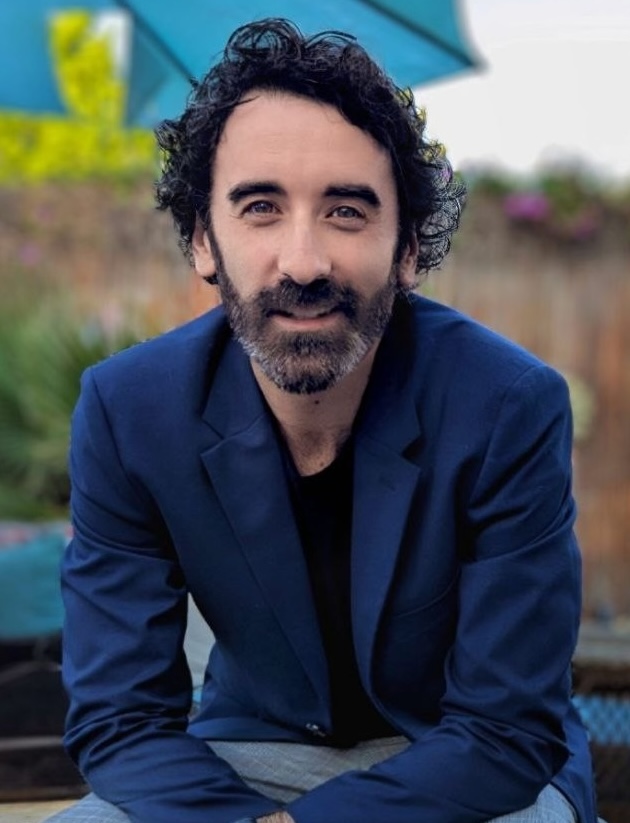
Nathan Hohsfield, AMFT
I'm a therapist in California working with adults recovering from religious trauma and high-control religion. If this resonated, a free consultation is a low-stakes place to start. More about me.
This article is for general information and is not medical advice, a diagnosis, or a substitute for individual care, and reading it doesn't create a therapeutic relationship. Any examples are composites and don't describe a real client. If you're in crisis, call or text 988. Nathan Hohsfield, AMFT #161406, supervised by Mike Chang, LMFT #86321.